I experienced akathisia in late 2002, and I would not wish the experience on anyone, it was several months of pure hell -- and it felt, subjectively, more like a decade. My experience was made much worse because my psychiatrist did not recognize it as akathisia, instead attempting to treat me with benzodiazepines and anti-psychotics. This did not work. (He still doesn't believe me, but all the symptoms fit, and now that I've demonstrated that propranolol works for me, he has deigned to humor me.)
How often does this happen? I don't know, but I suspect quite often: akathisia is easy to mistake for anxiety. There may be many suicides, and worse, that could have been prevented by a correct diagnosis.
Once identified, akathisia is straightforward to treat. Drugs such as propranolol and clonidine provide immediate relief. If the akathisia is caused by a medication (eg an anti-psychotic), the dose of the medication is reduced, or a different medication chosen. (Consult your doctor before doing any of these things.)
Note: Never go off a psychiatric medication cold turkey. Always taper the dose over a number of weeks, and make sure to consult your doctor first.
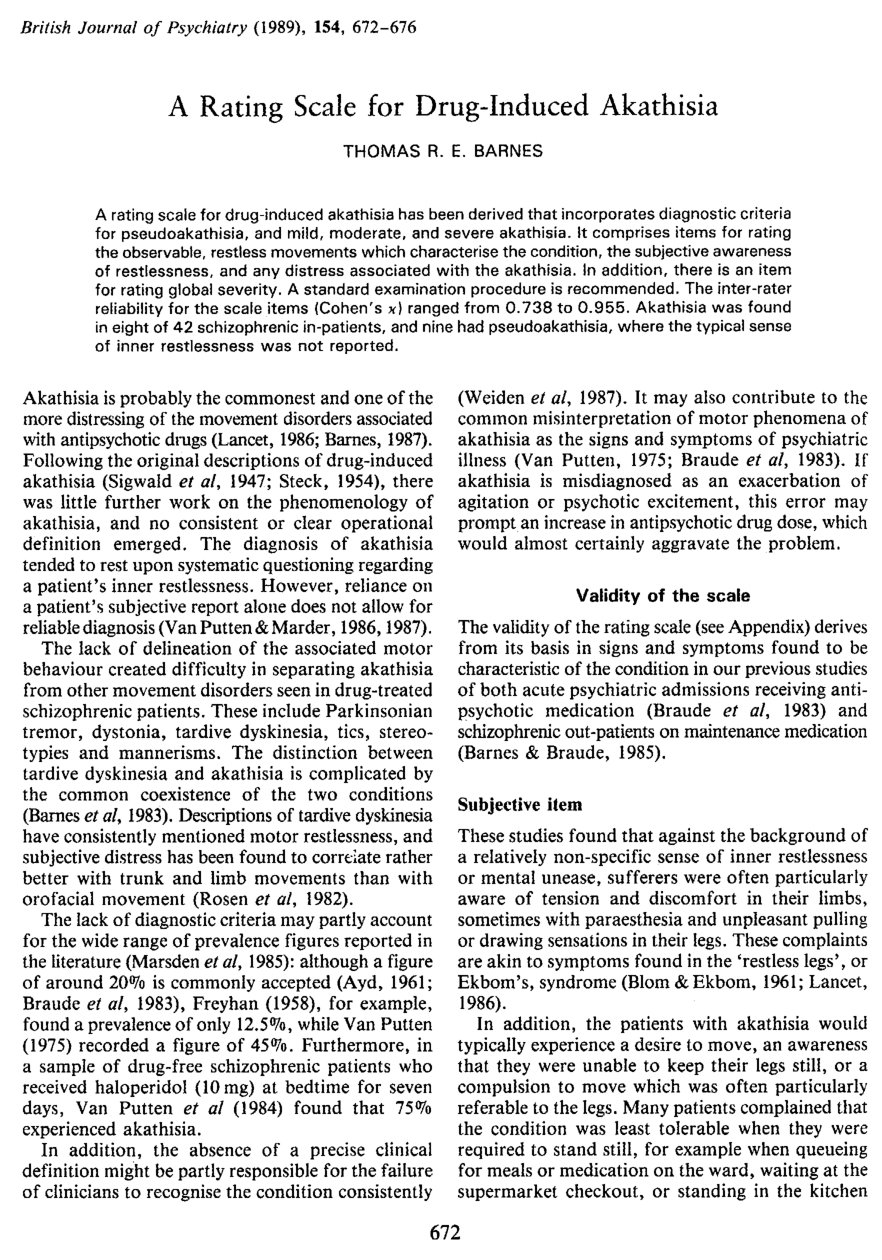
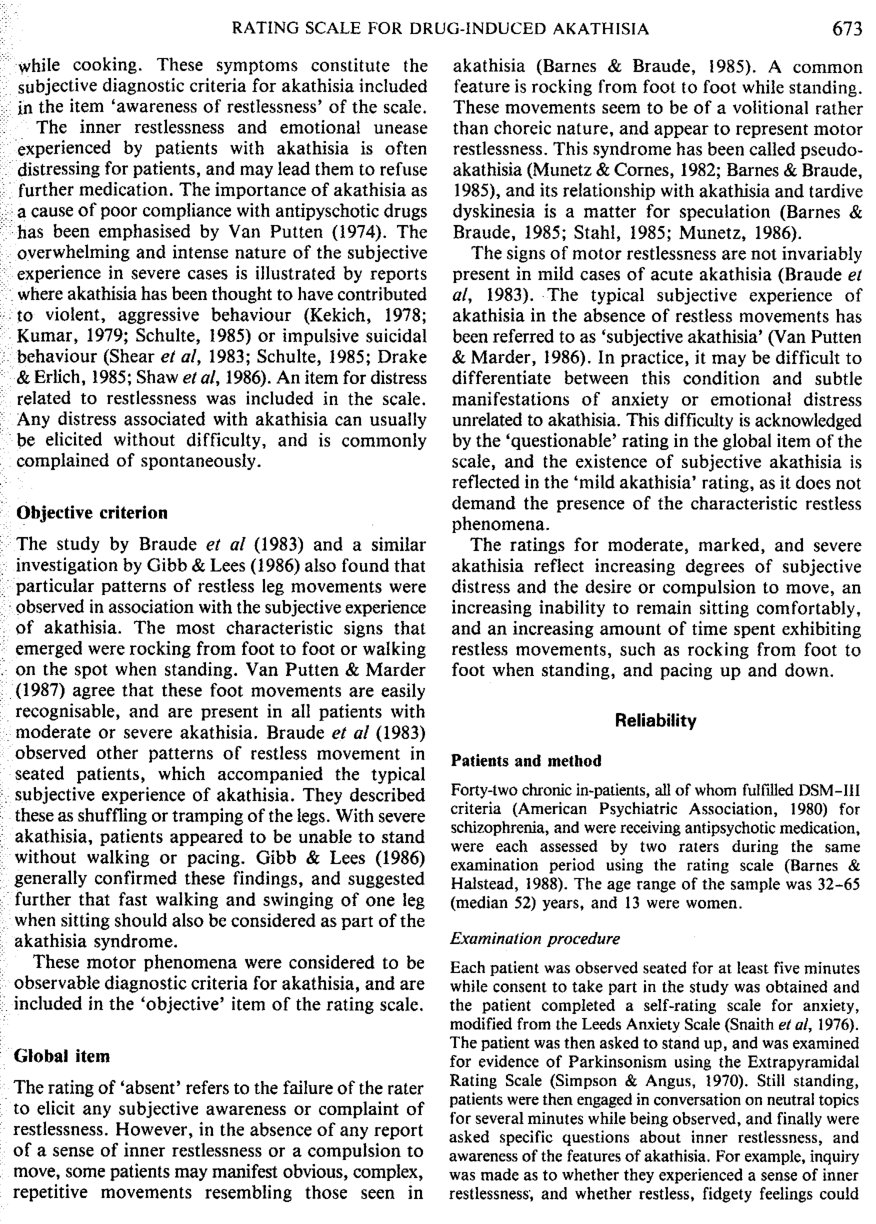
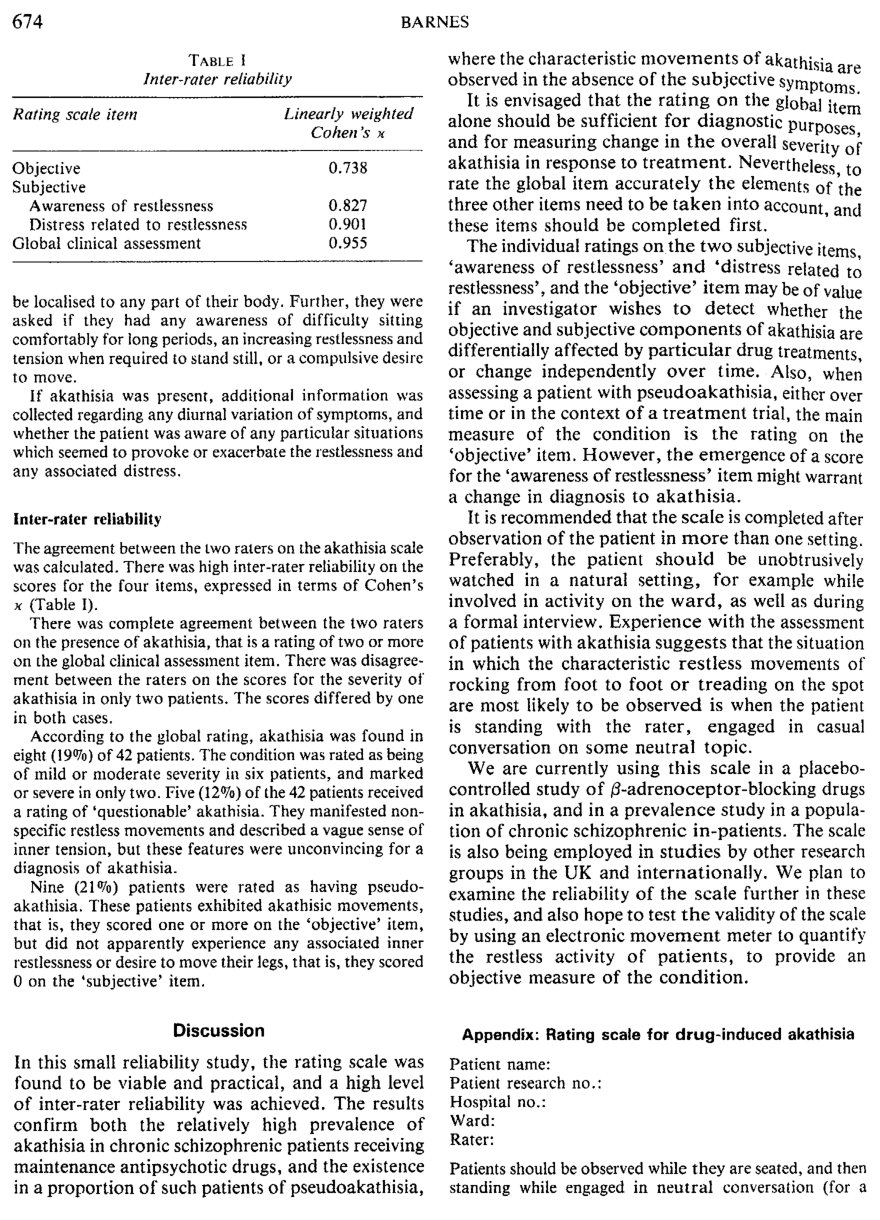
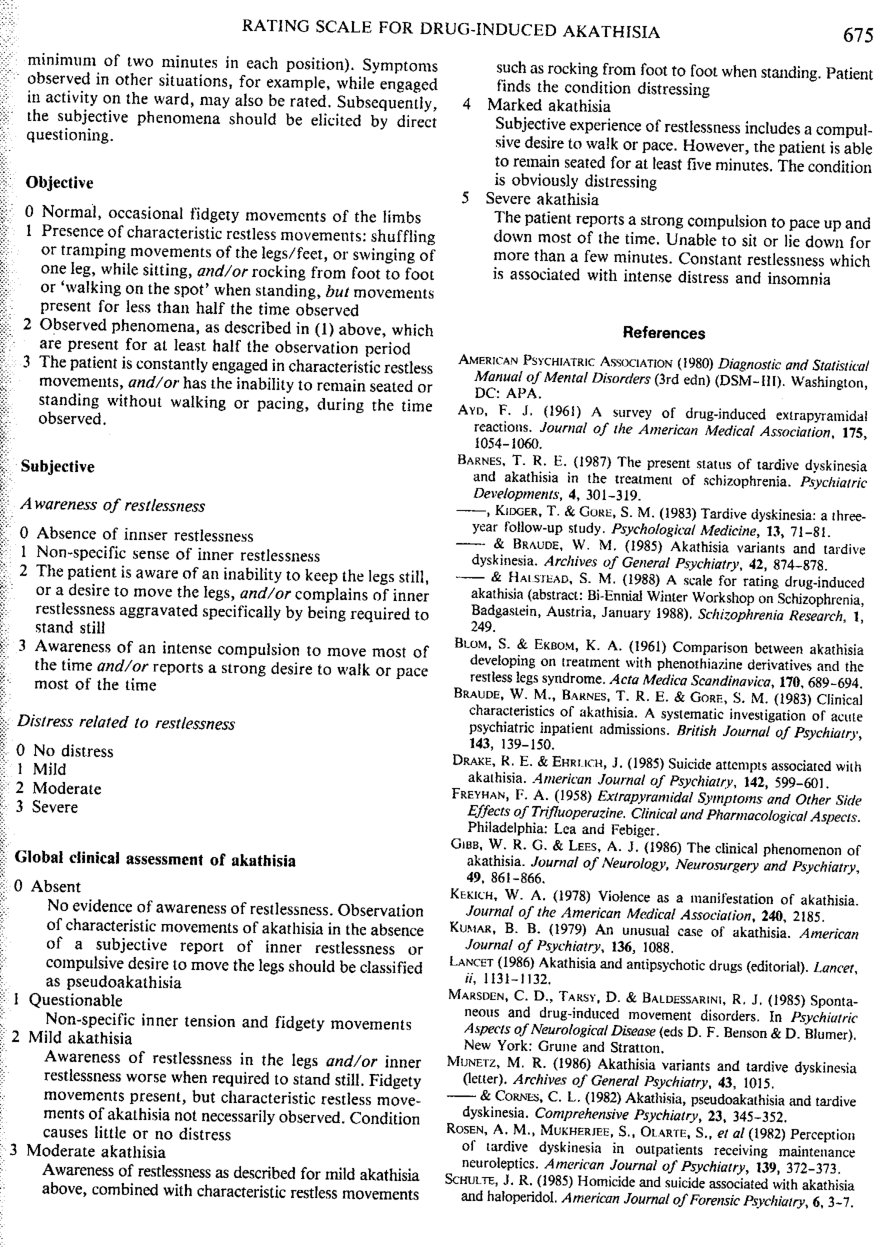
Barnes's Akathisia Scale seems to be the most widely used tool for measuing akathisia. I had difficulty finding it either on the web or in my university library. Therefore I am posting a copy here. This would be best administered by a trained physician, self administered tests are notorious for inducing hypochondria. Perhaps print it out and give it to your GP.
See also: Restless Legs Syndrome shares some features with akathisia, but seems to be distinct.